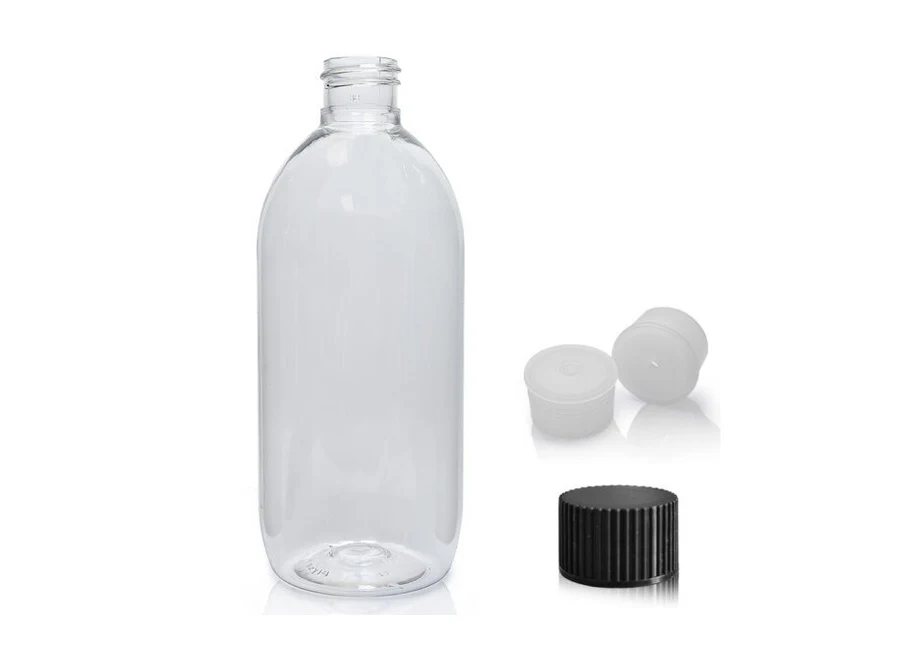
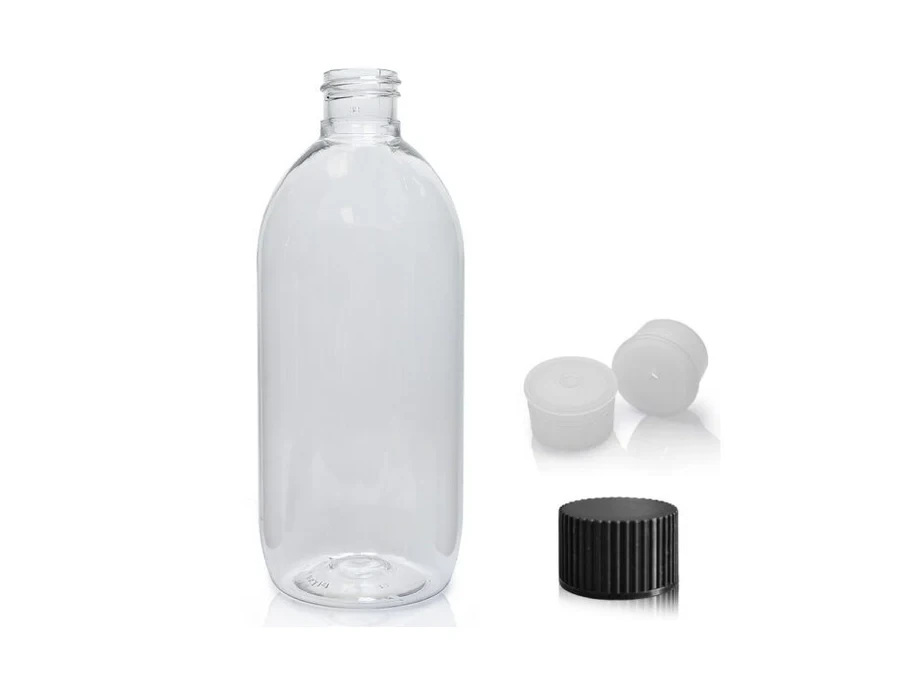
This page identifies a 500 ml clear PET bottle supplied with a 28 mm screw cap. Final suitability depends on the exact bottle and cap specification, the product being packed and the production process. The steps below turn the catalogue description into a usable approval and quotation brief without assuming performance that has not been tested.
Confirm the complete bottle-and-closure system
Record the bottle drawing, nominal and brimful capacity, weight, height, diameter or footprint, neck finish and dimensional tolerances. Record the cap material, thread or finish, liner or seal, tamper feature and applied height. A stated 28 mm size is not a universal compatibility standard; bottle and closure samples should be checked together. If an induction seal, dispensing fitment or overcap is required, include it in the same assessment.
Check the contents and filling conditions
Provide the product type, viscosity, density and any relevant chemical or oil content, together with the fill temperature, headspace, storage conditions and shelf-life target. The bottle, cap and liner must be reviewed for the intended use. Filling trials should also check foaming, drips, neck contamination and the stability of the filled bottle through capping, labelling and packing.
Line handling
Measure the bottle at the points used by guides, conveyors, timing screws, stars or pucks. Check empty-bottle stability, fill-head clearance, cap presentation, applied torque, label panel and code position. Define the planned output and changeover range rather than quoting a speed without test conditions.
Environmental evidence
The existing specification identifies clear PET, but a complete assessment still needs the exact resin and component declaration. If recycled content is requested, confirm the percentage and whether it applies to the bottle only. Consider the cap, label, adhesive, ink, liner and product residue when reviewing the end-of-life route.
Information for a Lancing quotation
- Required quantity per order and expected annual demand.
- Approved bottle and closure samples or dimensioned drawings.
- Product, fill temperature, shelf-life and storage requirements.
- Label, sleeve, coding, induction-seal and secondary-pack details.
- Current or proposed filling, capping and labelling equipment.
- Dated evidence required for any environmental statement.
Compare the wider bottle range, suitable caps and closures, labels, secondary shrink film and the packaging compatibility guide.
Buyer questions
Does a 28 mm cap fit every bottle described as 28 mm?
No. The exact neck-finish family, thread, sealing surface and tamper-band geometry must match. Supply the bottle and closure together, or provide both drawings, before compatibility is confirmed.
Can this bottle be approved from the nominal 500 ml capacity alone?
No. Capacity does not define brimful volume, bottle dimensions, neck finish, wall distribution, weight or line-handling behaviour. These details and physical samples are needed for final approval.
What should be checked with the product being filled?
Check the exact PET grade and all contact components against the product, fill temperature, storage conditions and target shelf life. A representative fill and storage trial may be required.
How should an environmental claim be handled?
Use a current declaration for the exact bottle and closure. Record the material, colour, component scope, any recycled-content basis and the intended UK collection context. Do not extend a statement about the bottle body to the whole pack without evidence.
What line samples should be supplied?
Supply enough empty bottles, caps and labels for handling, filling, capping, labelling and packing trials, plus the actual product or a safe representative equivalent.
When might another bottle format be more suitable?
A different resin, shape, neck, barrier construction or rigid material may be preferable when the product, fill temperature, dispensing system, transport load, shelf life or existing line cannot be met by this format.